1
/
of
1
Aptus
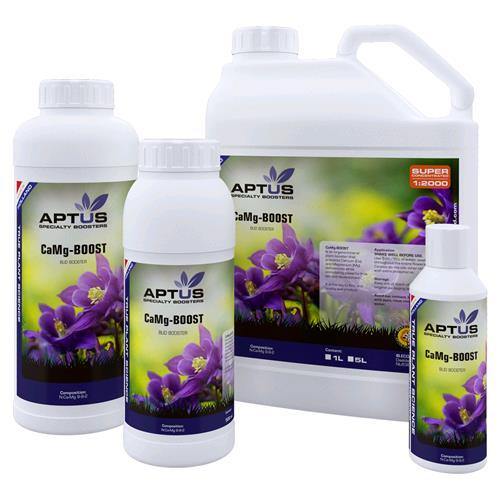
Aptus CaMg Boost 5L
Aptus CaMg Boost 5L
Regular price
€230,00
Regular price
Sale price
€230,00
Taxes included.
Shipping calculated at checkout.
Quantity
Couldn't load pickup availability
Aptus CaMg Boost 5L
CaMg-Boost is an organo-mineral additive that prevents calcium (Ca) and magnesium (Mg) deficiencies and stimulates powerful flower and fruit production. CaMg-Boost is the right solution for a compact and quality final product.
Why use CaMg-boost?
- – Provides organic nitrogen combined with calcium, magnesium and L-amino acids, which stimulate plant development.
- – Completely soluble in water, leaves no residue.
- – Combine calcium (Ca) and magnesium (Mg) with L-amino acids to correct deficiencies.
- – High bioavailability.
- – Improves the structure and solidity of flowers and fruits.
- – Provides the extra help the plant needs at certain stages of development.
How to use:
Use CaMg-Boost once a week from the third to fifth week of flowering. When using CaMg-Boost, do not add other additives containing phosphorus (PK 13/14, P-Boost, Super-PK, etc.). Mix 5 ml of product in 10 L of water. Shake before using. Completely water soluble. Leaves no residue in the irrigation system.
CaMg-boost elements:
- – Organic nitrogen (N).
- – Calcium (Ca).
- – Magnesium (Mg).
- – L-amino acids.
How does it work:
- – Helps plant structure and photosynthesis.
- – Improves the structure and solidity of flowers and fruits.
- – Stimulates the production of flowers and fruits.
- – Promotes enzymatic activity.
- – Higher levels of Ca and Mg help increase the internal pH of the plant to resist fungal attacks.
Advice:
- – Use CaMg-Boost in combination with P-Boost and K-Boost in the last few weeks to achieve maximum weight.
- – Be careful when mixing P-Boost and CaMg-Boost, as the two products can react. Always proceed by adding one product and diluting it, then adding the other. If you use phosphorus-based products extensively, be careful when adding CaMg-Boost, as phosphorus and calcium mixed together at high concentrations can produce deposits and residues.
Share